Share this...

Friday, July 24, 2015

Research from the Ground Up: Hannah Methwell (aka M.J. Logue)

I have been looking forward to this week's guest, Hannah Methwell. Hannah writes a historical fiction series (as M.J. Logue) set in the English Civil War - the Uncivil Wars series - which I blogged about HERE, having devoured the entire series while I was away on holiday.

What makes me particularly envious of Hannah is that she is a re-enactor. I am certain if I lived in England, I would be a re-enactor too, but alas, the Sealed Knot or English Civil War Society have not ventured downunder. I should add she is a one-eyed adherant to the Parliamentary cause and is trying to convert me...

When not attempting to redeem the reputation of the Army of Parliament, Hannah lives in Cornwall with her husband and son, three cats, and a toad under the back doorstep. 
As she says:  "There is little more to divulge, other than - "I had rather have a plain, russet-coated Captain, that knows what he fights for, and loves what he knows, than that which you call a Gentle-man and is nothing else. "


As this is a research post... it is only appropriate that Hannah talks to us about 'method research' - living the life of an English Civil War camp follower - which she does frequently.

RESEARCH FROM THE GROUND UP

I have the most unladylike wrists imaginable - broad and flat and solidly-muscled. 

Possibly, had I not learned to fight with a heavy backsword, I'd be a delicate little flower. But I did, and I'm thankful. (Not really. He's tall and fair and a bit scarred, and I'm red-haired. Probably Babbitt, then.) 


I decided when I was writing my first book set in the seventeenth century, that rather than writing randomly about stuff out of books, it might be an idea if I turned myself into one of Cromwell's plain russet-coated captains, who knew whereof she wrote and loved what she knew. 


Walking into the courtyard of a seventeenth-century inn in North Cornwall to meet half a hundred musketeers, pikemen and camp followers was one of the weirdest moments of my life. I was in a plain russet skirt and bodice, petticoats, stays, kerchief, coif, cap, latchet shoes, wool stockings. Some of them were in back and breast plate and buffcoat. Some were in officers' black, or soldiers' coats. There was nothing, at first glance, to anchor me into the present day, in that inn courtyard. Frightened the hell out of me, and in the same heartbeat, it was like coming home.

I have crawled out of a nest of blankets in a damp canvas tent in the first pearly light of a summer dawn, to bury bare feet in dew-wet grass and smell woodsmoke and frying bacon.
I have slept in a castle with the sound of the sea thirty yards below my head as the tide swept in.
I have cooked on an open fire in the rain.
I have faced a cavalry charge, and not broken.
I have fired a musket and fought hand-to-hand with a dragoon in a green field in Devon, and I didn't think the musket butt would ever be the same and I'm damn sure my knuckles haven't.
I have been preached at by a Ranter, married to a gentleman, and got drunk with cavalry officers. (Rowdy lot, they are, too.)
I've sat in an silent Elizabethan manor garden at dusk, with the bats flitting low in the air and the scent of hot grass and bruised rosemary rising from the earth as it cools.

I know Babbitt's world. I've lived in it.


For more information about the Babbit/Uncivil War books, visit M.J. Logues Website

RED HORSE - Babbit Book 1


September 1642, and the storm clouds of civil war are gathering over England. After the King raises his standard against his rebellious Parliament, idealistic young Luce Pettitt sees his duty clear - to defend the noble cause of freedom against the Royal tyrant. He doesn't expect that duty to lie with possibly the scruffiest, most disreputable troop of cavalry in the Army of Parliament, commanded by maverick ex-mercenary Hollie Babbitt. Events conspire to bring Hollie and Luce to a wary friendship, in spite of their differences. But in the aftermath of the first bloody battle of the war, will Luce keep faith with his ideals, or his friend?


Friday, July 17, 2015

MIddle Class Women in Georgian Times - Guest Elyse Huntington

And it's Friday! And another chilly week in Melbourne (Australia) - there has even been snow in Queensland (unheard of!).

To warm our hearts I have debut Australian author Elyse Huntington whose first book, MY DARK DUKE is the perfect antidote to a chilly night. Hailing from Borneo, Elyse joins the ranks of 'lawyers who write romance' (of which I am an alumni member!). The world seems to expect lawyers to write crime novels but romance is a wonderful escape from the cut and thrust of the legal world and I'm with her! Elyse has always had a fascination with Dukes and any book with Duke on the cover was an immediate draw card. Meet Elyse at her website, Facebook and Goodreads

MY DARK DUKE is set in Georgian rather than Regency times and Elyse's researches have taken her into some interesting areas. Today she focuses on the lives of middle class women of the 18th century. Welcome... Elyse!

Middle-class Women in 18th century England

Despite having written my first novel My Dark Duke which is set in England in 1770, I find that I am still discovering new information about 18th century England. Of course, this is hardly surprising. There are so many aspects of this century that information about it would encompass many encyclopedic volumes. There’s the politics, fashion, living conditions, architecture, medicine and social conventions, to name just a few. Today, though, I have chosen to focus on women who are considered to belong to the middle class in the Georgian era.
Childbirth was dangerous and infant mortality was high. Infants who progressed to solid food were fortunate to survive diseases such as infantile diarrhoea , which was likely caused by the preparation of food in unhygenic kitchens, from dirty bread, or from water or milk infested with bacteria. Babies who had teething problems might have their gums lanced with a sharp instrument. And if you think this sounded terrible, there is even advice that strong children should be bled from the jugular to help with teething!
Once the girls were older, they would attend day schools or boarding schools where they learnt subjects such as English, French, arithmetic, geography, needlework and dancing. Girls in more affluent households had governesses and visiting tutors and may be given lessons in languages such as Latin or Italian, and be taught how to play different musical instruments. It’s likely that part of the motive for their education, at least at some schools, was to assist them in obtaining husbands.
When it came to marriage, women found husbands from either working with them (such as domestic servants) or answering lonely-heart ads, some of which were hilariously prescriptive. I was surprised to find out that the average age of marriage was around 26 or so. And here I had thought ‘young’ ladies of this age were very much on-the-shelf.
This leads to the next interesting fact that an average family was estimated to have 2.5 children, so really, no bigger than the families you meet today. This is partially explained by the fact that the women were no longer at their most fertile by the time they married in their mid-twenties. There was also the adherence to the church’s calendar, which meant couples abstained from intercourse during Lent, Sundays and fasting days. This, in addition to menstruation and long periods of breast-feeding which could inhibit ovulation, meant that babies were not conceived very often.
The women had to supervise their servants to ensure the smooth running of their household. They also did their own food shopping at the markets (or street vendors) if they didn’t have a cook or a housekeeper, or were between cooks. Cooking in those days was very labour intensive. The cook had to ensure that the coal-fuelled fire was the perfect temperature for a roast pig or a cake, she had to maintain her cooking utensils and she had to preserve as much as she could to prevent waste. Thankfully, there were also establishments where you could buy ready-made dishes to eat in or take away, if you were to be in one of those highly inconvenient between-cooks periods.
I do admit that my preference is to write about the wealthy men and women in the aristocracy. I did find reading about this particular class of women to be quite entertaining. Who knows, one day I might even write about a duke who, against his better judgment, falls in love with such a female. She will be around 25, well-educated, independent and of course, be very impudent!
I leave you with this humorous anecdote of a marriage ceremony taken from Dr. Johnson’s London by Liza Picard which includes quotes from the Gentleman’s Magazine, September 1964. I can easily picture a heroine of mine doing exactly this!


When asked whether she would ‘take this man to be her wedded husband’, one woman said, ‘No and I have often told him so’. The parson asked the obvious question – why was she there?  ‘Only to tell you, before him, that I would not marry him’, and she left the church, and her swain.

MY DARK DUKE

Since his notorious wife died in mysterious circumstances, rumours about James, the handsome Duke of Trent, have scandalized society. Now, he must marry again – but finding an eligible woman willing to overlook his past won't be easy.

Defiantly single, Lady Alethea Sinclair has already turned down six offers of marriage. She prefers living on her own terms and refuses to answer to any man. Yet when Alethea meets the seductive and enigmatic Duke she finds herself strangely drawn to him.

Intrigued by Alethea's defiance of society's expectations, James is instantly taken with the willful beauty and soon they are enjoying a playful flirtation. And when circumstances force them into a comprising situation, he does the honourable thing and marries her.

But adjusting to the constraints of marriage doesn't come easily to the rebellious Alethea and, despite their growing feelings for each other, the Duke's troubled past keeps getting in the way. Can they learn to trust each other and give love a chance before it's too late?

A steamy Georgian romance about desire, the importance of staying true to yourself and the power of the past to cast a shadow on the present.

There is a bonus epilogue for My Dark Duke at her website so please do visit. And if you sign up for her mailing list, you will have exclusive access to a free short story when it becomes available. Click HERE

MY DARK DUKE is available at all reputable ebook stores...


Saturday, July 11, 2015

Brokering a Marriage - 17th Century Style - Guest Diane M. Denton

My Friday guest today is Diane Denton, one of the seventeenth century passionistas, with whom the magic of the 'interwebs' has allowed me to connect. Say what you like about Facebook and social media, I remain eternally grateful for the contacts it has given me and the friendships I have developed with people like Diane!

What to say about Diane? She is a true creative who finds expression through poetry and music and this is reflected in her wonderful novels, set partly in Italy and partly in Restoration England - A HOUSE NEAR LUCCOLI  and its sequel TO A STRANGE SOMEWHERE FLED (more on those later). The stories are interwoven with the beautiful baroque music of the period and the real lives of musicians such as Alessandro Stradella. I have learned so much about women and music in the 17th century (see Diane's post on HOYDENS AND FIREBRANDS... click HERE.  You can connect with Diane through her website... click HERE.

Continuing her thoughts on the life of women in the 17th century, Diane is bringing us a fabulous post on Marriage brokering and the part it plays in her book A HOUSE NEAR LUCCOLI. 

Over to Diane.... 

Marriage broker - someone who arranges (or tries to arrange) marriages for others, usually between strangers and for a fee.

Why would a talented up-and-coming composer, patronized by a Queen and other highly placed individuals, engage in marriage brokering? As with most of the self-injurious choices made by the flamboyant 17th century composer Alessandro Stradella (1639 – 1682), who is at the heart of my historical fiction A House Near Luccoli, there isn’t any definitive answer as to what he was thinking. 

Marriage... from Hogarth's A Rake's Progress
Although born to minor nobility and receiving many commissions, his extant letters reveal he was often in financial difficulty, which may have been due to his ‘employers’ not always paying him and his own mismanagement of money. In any case, in 1667 he was involved in a dubious marriage brokering scheme, and then again in 1671, an incident he referred to as “a certain misfortune” that happened to him in Rome.

With a well-known castrato as an accomplice, Stradella contrived to receive a substantial payment from an ugly old woman “of low birth, not respectable” by marrying her off to Cardinal who was a member of the powerful Roman Cibo family. It’s reported that Stradella and the singer got the Cardinal drunk and a priest performed the marriage before he sobered up. The Cardinal put the woman in a nunnery, had the marriage annulled, and demanded that Stradella and the castrato be imprisoned, one account claiming the latter was tried and found guilty, while Stradella avoided the same consequence by taking refuge in a convent and eventually fleeing Rome altogether.

This happened ten years before the timeline of A House Near Luccoli, which finds Stradella in Genoa involved in yet another scandal; but, as with most of his reckless adventures, it could not be left out of any part of his story entirely.

     There were woundings all the time. In words or actions, owned or anonymous, answered or ignored. Sometimes they were as obvious as Pier Francesco Guano attacked on the second of December, needing twelve stitched on his face. Lonati must have known it was old news, pounding the front door and rushing upstairs.
     “Only the beginning.” He didn’t acknowledge Donatella dropping music sheets, just Alessandro picking them up. “Beware. If you don’t turn around you’re a dead man.”
     Alessandro’s irritation came down on the keyboard, but then he played the piece as pleasantly as it was written, “I’m a prisoner of cortesia now.”
     Lonati snatched the pages out of Donatella’s hands. “Well, this is from the good old days. Rome, mid-sixties? All carnivals and palaces, especially for Monesio and Stradella.”
     “What’s behind us may be all there is.” Alessandro continued to accompany his aggravation with music that might soothe it.
     “Your singing was magnificent.”
     “What part?” Donatella approached the conversation.
     Alessandro winked. “Rigore, of course.”

     “The talk of the town,” Lonati began to pet her arm but thought better of it, “before he received more attention for his lack of discipline.”


A HOUSE NEAR LUCCOLI

Over three years since the charismatic composer, violinist, and singer Alessandro Stradella sought refuge in the palaces and twisted alleys of Genoa, royally welcomed despite the alleged scandals and even crimes that forced him to flee from Rome, Venice, and Turin, his professional and personal life have begun to unravel again. He is offered, by the very man he is rumored to have wronged, a respectable if slightly shabby apartment and yet another chance to redeem his character and career. 
He moves in to the curiosity and consternation of his caretakers, also tenants, three women whose reputations are of concern only to themselves. 
Donatella, still unmarried in her mid-thirties, is plainly irrelevant. Yet, like the city she lives in, there are hidden longings in her, propriety the rule, not cure, for what ails her. She cares more for her bedridden grandmother and cats than overbearing aunt, keeping house and tending to a small terraced garden, painting flowers and waxing poetic in her journal. At first, she is in awe of and certain she will have little to do with Stradella. Slowly, his ego, playfulness, need of a copyist and camouflage involve her in an inspired and insidious world, exciting and heartbreaking as she is enlarged by his magnanimity and reduced by his missteps, forging a friendship that challenges how far she will go.

Available from Amazon and Barnes and Noble


To A Strange Somewhere Fled

Sequel to A House Near Luccoli. 
After the sudden end to her collaboration with composer Alessandro Stradella, Donatella moves from Genoa to join her parents in a small village in Oxfordshire, England. 
The gift of a sonnet, 'stolen' music, inexpressible secrets, and an irrepressible spirit have stowed away on her journey. Haunted by whispers and visions, angels and demons, will she rise out of grief and aimlessness? 
Her father's friendship with the residents of Wroxton Abbey, who are important figures in the court of Charles II, offers new possibilities, especially as music and its masters—including the 'divine' Henry Purcell—have not finished with her yet.

Also available from Amazon and Barnes and Noble.


Saturday, July 4, 2015

Meeting my Waterloo: A sale, a contest and a new story...

The pathetic piece of muslin did little to conceal the stench of unwashed bodies, blood, corrupted wounds and worse that pervaded the makeshift hospital. The price Wellington had paid for the victory lay crowded on filthy straw mattresses on the makeshift hospital floor of an old warehouse in Battersea.
Everywhere she turned the wounded had been crowded together, so many of them that only a curtain separated the officers from the other ranks. Pushing aside the curtain, the conditions for the officers was little better. At least they had cots, not straw-filled bags, but those who had survived the rapid evacuation to England were in a poor state. Most still wore the tattered remnants of the uniform they had worn in battle over ten days ago and it looked to Isabel as if the rough bandages over their wounds had not been changed in days. 
(Opening lines from LORD SOMERTON'S HEIR ... by Alison Stuart)

Waterloo June 2015:  It is hard to imagine these peaceful fields were once the scene of so much carnage... (20,000 casualties)

The battle site of Waterloo today

Ten years ago, my military husband and I made a flying visit to the battle site at Waterloo, en route to returning a rental car. (Needless to say in the days before GPS we then got hopelessly lost trying to get back into Brussels and nearly missed our train... but that's another story).  That brief visit was the inspiration behind my Waterloo story LORD SOMERTON'S HEIR which starts in the days immediately following the battle.

On our recent travels, booked in complete ignorance that June 18 2015 was in fact the bicentennial of Waterloo, we found ourselves accidentally on a Waterloo trail that began in London with a visit to the Guards Museum and ended at Waterloo - the week before the Bicentennial weekend of re-enactments. A little bit of better planning and we could have been AT the bicentennial! However as it turned out, we had the place pretty much to ourselves, apart from hordes of workmen frantically trying to finish the paving and put up signs and bleachers etc. 


Alison labours up the 200 steps of the Butte de Lion

The new Visitors' Centre had been open a week and it is a marvel of 21st century technology including animated paintings, detailed and lifelike wax mannequins and a 3D movie about the battle that has you ducking for cover while facing the charge of 8000 French Curaissiers! 


Napoleon's staff on the eve of Waterloo - Visitors' Centre


Needless to say I have returned with a Waterloo buzz and a suitcase full of Waterloo memorabilia so in conjunction with my wonderful publishers from the 4th to the 13th of July I have a very special offer... several very special offers.


A CONTEST...  The prize is a collection of Waterloo memorabilia including a full reproduction of The Times with Wellington's Waterloo despatch. To enter, you only have to participate in the RAFFLECOPTER at the end of this post or click HERE


A SALE Lord Somerton's Heir , my own 'Waterloo' story will be on sale on Amazon and iBooks for only .99c for this week only.


A NEW STORY And finally, in honour of Waterloo I have written a short story... a prequel to LORD SOMERTON'S HEIR, which I have titled SEBASTIAN'S WATERLOO, in which we share the events of the 18th June 1815 with the hero of LORD SOMERTON'S HEIR, Captain Sebastian Alder.  

This available is FREE to subscribers of my Readers' Group Newsletter... so you can subscribe here to either read the story on line or download it to your ereader.

TO SUBSCRIBE JUST CLICK HERE OR USE THE FORM TO THE RIGHT OF THIS POST


ENTER THE WATERLOO CONTEST HERE


Friday, July 3, 2015

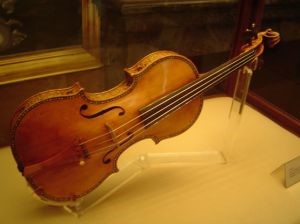
The sweetest notes of all - Stradivarius violins and my guest Lee Christine

My guest on this cold, grey Melbourne winter day is fellow Escape author, Lee Christine.

Music has always played a part in Lee's life and as a teenager she loved playing the guitar and writing songs. Those lyrics were all about love so when she turned her hand to writing novels later in life romance was the obvious choice. Lee’s novels are sexy, fast-paced and contemporary. She lives on Australia’s eastern seaboard and loves snow skiing and playing the alto saxophone.

Lee writes wonderful romantic suspense and her three part 'Safe' series has received fantastic reviews.  A Dangerous Arrangement (Dangerous Arrangements Book 1) , book one in Lee’s next romantic suspense series has just been released.

In keeping with her interest in music,  she is bringing us some little known facts about the wonderful Stradivarius violins. 

WHAT DO YOU KNOW ABOUT STRADIVARIUS VIOLINS?

Thank you Alison for having me of your blog today!


In my latest romantic suspense novel, ‘A Dangerous Arrangement’ released by Escape Publishing, my heroine plays a Stradivarius violin, an instrument constructed of a dense Croatian maple and made by Antonio Stradivari (1644-1737) an Italian luthier.

I’ve always been fascinated by the Stradivarius, primarily the violin, though Stradivari also made violas, harps, guitars and cellos. And for a long while now, I’ve wanted to write stories about classical musicians, performers at the top of their game who’ve been given access to instruments worth millions of dollars, such as the Stradivarius, though tenures with certain orchestras.

Experts don’t really know what gives the Stradivarius its superior sound though it is believed to have something to do with the density of the wood.

The Australian Chamber Orchestra own a Stradivarius violin valued at around three million dollars. It is Australia’s only Stradivarius and is played by Satu Vanska, the assistant leader of the orchestra. I partly used Satu as inspiration for my character of Marina Wentworth as well as Kirsten Williams, associate concertmaster with the Sydney Symphony Orchestra.

There are only 650 Stradivarius instruments left in the world and each has a unique nickname. The following is a list of famous people who have owned and/or played a Stradivarius instrument:-
·         Andre Rieu: plays a violin called ex-Captain Saville, made in 1667
·         Queen Elizabeth: owned a violin called Oistrakh, made in 1671
·         Napoleon Bonaparte: owned a violin called Molitor, made in 1697
·         The Mendelssohn Family: owned a violin called the Red Mendelssohn, made in 1721
·         Da Vinci Family: owed a violin called the Leonardo Da Vinci, made in 1725
·         Julian Lloyd-Webber: played a cello called Barjansky, made in 1690
·         Yo-Yo Ma: plays a cello called Davidov, made in 1712

Other owners include the King of Spain, US Library of Congress and some US and UK universities.  Many also owned by different musical foundations and museums.

Visit Lee Christine at her website:  Click HERE

A DANGEROUS ARRANGEMENT

When violinist Marina Wentworth arrives in Venice en-route to a cruise ship for a short working holiday, the last thing she expects is to be confronted by a handsome stranger demanding answers. After going to great lengths to keep her real reasons for the trip a secret, Marina refuses to let her immediate attraction to Dean Logan derail her plans.

Desperate to recover his latest super yacht designs, Dean doesn’t want to believe the lovely violinist is involved in the devastating cyber-attack that threatens to destroy his yacht building empire. However his growing feelings for Marina fail to extinguish the nagging suspicion that she is hiding something.

Set against the backdrop of Italy’s Amalfi Coast, Dean and Marina must navigate the dangerous waters of secrecy, attraction, and the fusion of two very different worlds. Will their lives remain discordant, or will they take the chance at true harmony?

To buy A DANGEROUS ARRANGEMENT visit ESCAPE PUBLISHING  or go directly to AMAZON


Wednesday, June 24, 2015

Book Review - The Uncivil Wars Series by M.J. Logue

Another "Missing in Action" post... Actually I have been travelling - nearly six weeks of 'research' in the UK and Europe. Museums, castles, cathedrals... so much information to absorb it is dribbling out of my ears! More on my travels in later posts.

One thing travel has afforded is long hours in planes and trains and an opportunity to catch up on reading and the books that have held me in a thrall is a new series, set in my favourite period, the English Civil War, by writer M.J. Logue - THE UNCIVIL WARS. 


I should declare that Logue (or her alter ego, Hannah Methwell) is a compadre of mine... sharing as we do a PASSION for the English Civil War. Unlike me, Hannah is able to indulge her passion as a proper re-enactor and as a consequence she lives and breathes the ECW in ways I can only fantasise about... and it shows in her writing.

It is too hard to separate out the Uncivil War stories,  because although they stand alone, they are at the same time entwined and episodic. Logue has done something really unusual... she has created a troop of Parliamentary cavalry under the command of an unusual hero, more an anti-hero, Holofernes Babbit (Hollie). To complement the three UCW books written to date, are 3 short novellas that delve into the backstory of the characters and I think it is important. to at least read KERSEN before embarking on the series as this story introduces us to the 16 year old Hollie adrift in Holland, having fled his brutal father to join the fighting in the 30 year wars.

Twenty years later (in THE RED HORSE) we meet a hardened and embittered mercenary who has returned to England to take the pay of king of parliament... whoever offers the most... and fight in the English Civil Wars. Tall, auburn haired, scarred emotionally and physically, like his horse, the vicious Tyburn, Hollie won't easily be broken to obey the commands of men he considers his military inferior. On and off the battlefield he is difficult, obstreporous, volatile and unpredictable. He has been given command of a raggle taggle troop of the sweepings of the street... so much for the perception of 'roundheads' as dour and godly crop heads.

Hollie's fire is tempered by the calm and poetic nature of the young man who is made his Cornet, a task Lucifer (Luce) Pettit initially baulks at. Unlike Hollie, Luce (a gentleman by birth and nephew to the Earl of Essex) genuinely believes in the cause for which he is fighting.

Logue's writing, like Hollie, defies convention. The story is told from any number of perspectives and sometimes all in the same scene, but it works. You get right under the characters' skins and come to care for all of them, even the horses, deeply! The dialogue is utterly true to period and to each character.

Now to the books... KERSEN (Hollie's story) I have mentioned. There are 2 other short prequels, A CLOAK OF ZEAL and UNBREAKABLE both of which centre on a young man, Thankful Russell (or Hapless as he comes to be called for good reason) who we meet briefly in Book 1 but by Book 3 is a member of Hollie's regiment.


BOOK 1: THE RED HORSE - in which we meet Captain Hollie Babbit and his reluctant new cornet, Luce Pettit. This book spans the early days of the war (August 1642 to December 1642), a time of battles that are fought and neither won nor lost, the reality of the battlefield and the uncertain politics surrounding the command of the Parliamentary forces. Through all of this Hollie rages, somewhat unsuccessfully. wounded at Edgehill and forced into the company of Luce, the two form a grudging respect bordering on friendship. Luce takes his shattered commander home to meet his Aunt Het ('the mendingest lady in Essex') and in Het's care, Hollie begins to heal not only physically but emotionally.

Book 2: COMMAND THE RAVEN - picks up in the early months of 1643 with Hollie back in
command of his uncommandable troop, while hankering after Het who has offered him a glimpse of what life with hearth and home could be like. In despair 'Uncle Essex' sends him north to support the Parliamentary cause being led by the Fairfaxes. Sir Thomas Fairfax is a particular favourite of mine and Logue's too, I suspect. He is drawn with great affection and respect but recognising his weaknesses too. In this book we meet Thankful Russell, on the staff of Essex. They are also joined by Hollie's father, the firey preacher, Elijah Babbit and the issues from his childhood which drove him away at 16 have to be confronted. Like the first book, the book ends with a return to Het's arms.

And here I must take a small issue with Logue.... rather than continue the series with what should be next book (1643/4),  by her own admission, she jumps to 1645. Yes it stands by itself, but we miss the arcs of the characters in the intervening 2 years... during which Hapless becomes one of the Babbit troop and a peculiar little trooper called Gray who may not be what he appears to be joins them as well. Without the intervening years, as a reader it made me hard to engage with a really important character who will die in A WILDERNESS OF SIN. The character's death is sad but if we had a better opportunity to get to know this character in greater depth, it would have been even more heartbreaking. A small point and it does not detract from reading A WILDERNESS OF SIN as a stand alone.

Book 3: A WILDERNESS OF SIN... begins in the aftermath of the battle of Naseby in June 1645 during which Hapless has been badly wounded in an altercation that has nothing to do with King and Parliament and everything to do with Trooper Gray. Once again the broken men return to Het for 'mending' but Hollie has to return to the war and a New Model Army which has no time or patience for men like him. As the Parliamentary forces start mopping up the last royalist resistance, the war has become a tedious routine of sieges and beaurocracy and Hollie does not react well to being curbed in this matter. In the aftermath of the death of one of the key characters ( a scene which had me reaching for tissues in the  middle of an airport), Hollie begins to question why he is doing what he is doing. His own sense of honour will see him complete the task but at the end of the book, like small desperate child, he asks Het 'Do I have to go back?'

Logue's writing is compelling, her voice utterly unique. I can't think of another author's writings to compare. Hollie Babbit is NOT a Richard Sharpe but in the eposidic nature of the stories and the well written cast of secondary characters (including animals), there are some slight similarities. This is pure historical fiction at its best. While there is romance, it is not romantic historical fiction. Logue's battles are brutal and bloody, no glossing over the horror that is a civil war. She has created sympathetic characters to espouse the 'unpopular' side (the Parliamentary cause) and she also captures the complex politics of the time in a way that makes it accessible and understandable to the reader.

This is such an important period of history and yet it is not a 'popular' subject for fiction. There are a few of us, hacking away at the corners in the hope that more readers will come to love this period as we do. Logue's books fill an important niche. 

I am hanging out for the next stories... hurry up, Hannah!  

(You can find out more about THE UNCIVIL WARS at http://uncivilwars.blogspot.com.au/ and you will meet Hannah next month when she is my guest on Friday Fun Facts)


Thursday, May 7, 2015

MIA or 6 things I learned from a book deadline...

Firstly I must issue an apology for my recent absence from the blogosphere ... I have just crawled out of the tangled jungle of a contracted 'book deadline' -  (without the assistance of Humphrey Bogart...)


This is the first time I have encountered this beast before and it all seemed fairly straightforward when I put my signature to a contract around July last year that said 'Thou shalt deliver unto us a completed manuscript by no later than 30 April 2015'

I blithely tossed my hair... 'Oodles of time', thought I. 'I've published 6 books. Loads of my friends do it on a regular basis. It can't be too hard...'

HOWEVER what with one thing and another... I did not get to sit down to even consider the concept of the book until September - giving me seven months to write the book from a standing start. 

There I hit my first snag.

I had a hero, a historical time span but no earthly idea where to go from there. I resorted to Tarot Cards (no kidding) - as a mind kicking exercise it is brilliant, by the end of that session with my Writers Group, I had a heroine, an antagonist and motivations etc. etc. 

Next step, said I, let's PLOT the story. I have stated on many occasions I am not a plotter but I thought on this occasion something more than just 'a vague idea' was needed, so I plotted - or thought I did. I then sat down to write and, you guessed it, the plot went out of the window... Of the 7 months I had available to me it took me 5 months to write the rough draft.

Throw into this mix, two weddings (I have now officially run out of children to marry off), Christmas, the fact I still work, edits on other books... and time began to disappear from underneath me. Extraneous activities (such as keeping up with my blog went out of the window) but I am pleased to say I fell across the finish line with the duly finished story delivered up to my publisher on the due date.

So what have I learned from this exercise?

1. I can write a book to a deadline but at a cost to my life, my health, my family and my sanity. Next time there will have to be an enormous 6 figure advance attached to it!
2. I can write a book to a deadline and still be a pantser but at a cost to my life, my health etc etc...(see 1 above)
3. I cannot plot (see 2 above).
4. In order to reach the deadline with something that looks vaguely book shaped, I had to write SOMETHING every day... even if some days it felt like I was carving every word from stone with my thumbnail. 
5. I could not have done it without someone keeping me accountable and that someone was a Facebook group set up by my friend Monique McDonell #1000wordsaday. Only by checking in my word count on a daily basis did I get across that line. Some days were woeful some were good, but word by word I got across that line and I don't think I could have done it without the support of that group and the accountability of having to check in daily. Actually I had 2 'someones' because standing behind me with their shoulders against my back when it looked like my steps might falter, were the wonderful ladies of my Writers' Group to whom I am completely accountable for my goals...
6. When in doubt... resort to Tarot Cards...

Of course it remains to be seen whether the book I delivered passes muster with my editor, but any rewrites will be welcome and only improve the story.

So how did I eventually do it? In this photograph, the sheet of paper with the sticky notes is my first attempt at plotting. The picture of the white board (expunged the day I handed the story in!) is how I actually got it over the line, using the 4 Act method of writing. The black writing was where I had got in the plot and the red was what was needed to bring it home. 

Plotting for pantsers... Alison style
THAT worked well but I had to be halfway through the book before it even started to work. 

Oh... and Scrivener... I couldn't have done it without Scrivener (or my Writers' Group or my husband...)

(I am just about to go AWOL again as I head off on a 6 week vacation... but once I am back in June I have some very exciting projects to get my teeth stuck into - and the deadlines will be of my own choosing!)  WATCH THIS SPACE....